

Remote work has become an important part of the modern employment market, giving professionals the opportunity to work for organizations without necessarily relocating to the employer’s physical office. For Nigerian job seekers, remote jobs in Nigeria can provide access to opportunities across technology, customer service, administration, marketing, sales, finance, education, design and other fields.
However, the growing popularity of remote work has also created opportunities for scammers. Fake recruiters can advertise attractive work-from-home positions, impersonate genuine companies, request personal information or demand money before employment begins. The U.S. Federal Trade Commission (FTC) has repeatedly warned that remote and work-from-home job scams can be used to steal applicants’ money or personal information.
Finding legitimate remote employment therefore requires more than searching for “work from home jobs.” Job seekers need to understand how remote recruitment works, where legitimate vacancies are advertised, how to prepare for online applications and interviews, and how to verify an employer before providing sensitive information.
This guide explains how Nigerian job seekers can approach the remote job market professionally and safely.
What Are Remote Jobs?
A remote job is a position that allows an employee or contractor to perform some or all of their work away from the employer’s physical office.
Depending on the employer, remote work may be:
- Fully remote
- Remote within Nigeria
- Remote within a particular country
- Remote within a specific region or time zone
- Hybrid
- Remote-first
- Contract-based
- Freelance
It is important to read the location requirements carefully.
A vacancy described as “remote” does not automatically mean that applicants can work from anywhere in the world.
For example, an international employer may advertise a remote position but specify that candidates must reside in the United States, United Kingdom, European Union or another particular jurisdiction.
Nigerian applicants should therefore look for phrases such as:
- Remote – Nigeria
- Remote – Africa
- Remote – Worldwide
- Work from anywhere
- Remote within specific time zones
- Open to international applicants
Understanding this distinction can save applicants considerable time.
Why Are Remote Jobs Attractive to Nigerian Job Seekers?
Remote employment can provide several practical benefits.
1. Access to a Wider Employment Market
Traditional employment often requires a candidate to live within commuting distance of the employer.
Remote work can remove that geographical restriction.
A qualified Nigerian professional may be able to work for an organization located in another Nigerian state or, where the employer permits international hiring, for an organization based outside Nigeria.
This can expand the number of potential opportunities available to skilled candidates.
2. Reduced Commuting Costs
Working remotely can eliminate or reduce daily transportation expenses.
For employees who would otherwise spend significant amounts of time and money commuting, remote work can provide greater flexibility.
3. Greater Flexibility
Some remote positions allow employees to work flexible schedules, although this depends entirely on the employer.
Remote does not automatically mean flexible.
An employer may require employees to work specific hours or maintain availability during a particular time zone.
4. Opportunities for Digital Professionals
Many remote positions are particularly suited to work that can be completed using computers and online collaboration tools.
Examples include:
- Software development
- Digital marketing
- Content writing
- Graphic design
- UI/UX design
- Customer support
- Virtual assistance
- Data analysis
- Project management
- Sales
- Recruitment
- Accounting
- Online tutoring
However, remote opportunities are not limited to technology jobs.
Are There Really Remote Jobs Available to Nigerians?
Yes.
Remote positions are advertised in Nigeria across multiple sectors.
For example, Jobberman’s current remote-job listings include positions across areas such as IT and telecommunications, software and data, marketing and communications, customer service, accounting, administration, sales, human resources, education and project management. Its remote listings also include full-time, contract, internship/graduate and part-time opportunities.
This demonstrates an important point:
Remote work is not exclusively for software developers.
Professionals with the right skills can find remote opportunities in many different occupations.
Types of Remote Jobs Nigerians Can Apply For
Technology and Software
Technology remains one of the most visible areas of remote employment.
Possible roles include:
- Frontend Developer
- Backend Developer
- Full-Stack Developer
- Software Engineer
- Mobile App Developer
- QA Tester
- DevOps Engineer
- Cloud Engineer
- Data Analyst
- Cybersecurity Analyst
- Technical Support Specialist
Digital Marketing
Digital marketing is also highly compatible with remote work.
Possible positions include:
- Digital Marketing Specialist
- SEO Specialist
- Content Strategist
- Social Media Manager
- Email Marketing Specialist
- PPC Specialist
- Marketing Coordinator
Customer Service
Many organizations operate customer support through digital channels.
Positions can include:
- Customer Support Representative
- Customer Success Specialist
- Chat Support Agent
- Technical Support Representative
- Client Service Officer
Administration
Remote administrative positions can include:
- Virtual Assistant
- Administrative Assistant
- Executive Assistant
- Data Entry Clerk
- Operations Assistant
- Project Coordinator
Creative Work
Creative professionals may also work remotely.
Examples include:
- Graphic Designer
- UI/UX Designer
- Video Editor
- Copywriter
- Content Writer
- Illustrator
- Brand Designer
Finance and Accounting
Depending on the employer and regulatory requirements, remote positions can include:
- Accountant
- Bookkeeper
- Financial Analyst
- Accounts Payable Specialist
- Accounts Receivable Specialist
- Finance Assistant
Education
Remote education opportunities can include:
- Online Tutor
- Subject Teacher
- Course Instructor
- Instructional Designer
- Academic Content Developer
The key is to identify skills that can be delivered effectively through digital platforms.
Where Can Nigerians Find Legitimate Remote Jobs?
A successful remote job search requires using reliable sources rather than responding to every job advertisement encountered on social media.
1. Established Job Platforms
Job boards can provide a useful starting point because they allow candidates to search by job title, location, industry and work arrangement.
For example, Jobberman currently provides dedicated remote-job listings and allows candidates to filter opportunities by work type and experience level.
Job seekers should still verify the employer and vacancy before providing sensitive information.
2. LinkedIn
LinkedIn Jobs is another important source of professional opportunities.
Candidates can search for combinations such as:
- Remote Software Developer
- Remote Customer Support
- Remote Administrative Assistant
- Remote Digital Marketing
- Remote Accountant
- Remote Recruitment
- Remote Content Writer
LinkedIn can also help candidates research the company, recruiter and other employees.
3. Company Career Pages
One of the safest ways to verify a vacancy is to locate the employer’s official website and check its careers page.
Suppose you find a remote vacancy claiming to be from a particular company.
Instead of immediately submitting personal information through the advertisement, search for the company’s official website and determine whether the position appears on its legitimate careers page.
If the company has no evidence of the advertised position, investigate further before proceeding.
4. Professional Networks
Networking can also reveal opportunities that are not widely advertised.
Build relationships with:
- Recruiters
- HR professionals
- Industry experts
- Former colleagues
- University alumni
- Professional associations
- Other professionals in your field
A strong professional network can increase your exposure to opportunities.
How to Recognize a Legitimate Remote Job
Finding an advertisement is not the same as finding a legitimate job.
Before applying, investigate the opportunity.
Check the Company
Find out:
- Does the company have an official website?
- Does it have a professional online presence?
- Is the company operating in the industry it claims?
- Does the advertised position appear on its official website?
- Can you identify real employees?
- Does the recruiter’s identity make sense?
The FTC recommends searching for the company or person offering the job together with terms such as “scam,” “review” or “complaint.”
Check the Recruiter’s Email Address
Be cautious when someone claiming to represent a large company contacts you from an unrelated personal email account.
The FTC specifically identifies recruiters using personal email accounts instead of corporate addresses as one warning sign applicants should investigate.
This does not mean every recruiter using a non-corporate address is automatically fraudulent, but it is a reason to verify the opportunity independently.
Never Pay to Get a Job
This is one of the most important rules for job seekers.
Do not pay someone simply because they promise to give you employment.
Legitimate employers generally do not require candidates to pay a recruitment fee in exchange for employment.
The FTC states plainly that honest employers will not ask applicants to pay to get a job.
Be especially careful when someone asks you to pay for:
- Registration
- Interview access
- Recruitment
- Job placement
- Mandatory training
- Equipment
- Security deposits
- Special certificates
- Account activation
- “Processing fees”
- Guaranteed employment
A request for money does not necessarily prove fraud in every conceivable employment arrangement, but an unexpected payment demand should trigger serious verification.
Be Careful With “Work From Home and Earn Huge Money” Offers
One common scam pattern involves unrealistic income promises.
An advertisement might claim:
“Earn ₦500,000 every week working only two hours a day.”
Another might promise:
“No experience required. Guaranteed income. Start today.”
These claims deserve skepticism.
The FTC warns about work-from-home schemes that promise large amounts of money with little effort.
Legitimate employment normally involves:
- Clearly defined responsibilities
- A hiring process
- Skills or qualifications
- An identifiable employer
- Clear compensation terms
- An actual work arrangement
High compensation is not automatically a scam.
But high income + little work + no experience + immediate hiring + upfront payment is a combination that should make applicants extremely cautious.
Beware of Fake Remote Job Interviews
Scammers can create convincing recruitment processes.
A fake recruiter may conduct:
- WhatsApp interviews
- Telegram interviews
- Email interviews
- Fake video interviews
- Fake company onboarding
- Fake employment portals
The FTC has warned that scammers sometimes conduct fake online interviews and create false onboarding processes to obtain personal or financial information.
Therefore, the existence of an “interview” does not automatically prove that a job is genuine.
Verify the employer independently.
Be Careful With WhatsApp and Telegram Job Offers
WhatsApp and Telegram can be legitimate communication tools.
The problem is not the platform itself.
The problem is unexpected recruitment messages that provide little verifiable information.
The FTC has specifically warned about unexpected WhatsApp, Telegram and text messages offering remote work or online task opportunities.
Be particularly cautious if the message:
- Comes unexpectedly
- Does not identify a verifiable company
- Promises unusually high earnings
- Requires you to deposit money
- Asks you to buy cryptocurrency
- Asks you to rate products for money
- Requires you to recruit others
- Requests sensitive financial information immediately
Understand the “Task Scam”
Task scams have become an important category of online employment fraud.
The victim is offered simple online tasks such as:
- Liking videos
- Rating products
- “Optimizing” products
- Clicking links
- Reviewing items
- Completing online activities
The platform may display supposed earnings.
Eventually, the victim is asked to deposit their own money to unlock additional tasks or withdraw supposed earnings.
The FTC describes this as a scam pattern in which the displayed earnings are fake and the victim’s deposited money is what the scammer is actually targeting.
The rule is simple:
Never deposit your own money to unlock wages that you supposedly earned.
Never Deposit a Check and Send Money Back
Another common employment scam involves a fake cheque.
The supposed employer sends money to the applicant and then says:
“We accidentally overpaid you. Send the difference back.”
Or:
“Use the money to buy equipment and send the remaining amount back.”
The payment may initially appear to have cleared.
Later, the bank can determine that the cheque was fraudulent.
The applicant can then be responsible for the money that was withdrawn or transferred.
The FTC specifically warns against employers sending checks and asking workers to return part of the money or purchase gift cards.
Protect Your Personal Information
Job seekers should understand the difference between ordinary recruitment information and highly sensitive financial information.
A legitimate employer may eventually require information needed for employment administration and payroll.
However, be extremely cautious when someone requests sensitive information before a genuine recruitment process has taken place.
Warning signs include requests for:
- Bank account credentials
- Passwords
- PINs
- One-time passwords
- Cryptocurrency wallet access
- Full financial login information
- Unnecessary identity documents
- Payment card details
The FTC warns that fake recruiters may seek personal and financial information under the appearance of employment paperwork.
Never provide passwords or OTPs to a recruiter.
How to Prepare Your CV for Remote Jobs
Your CV should make your remote-working ability obvious.
Don’t simply write:
“Good communication skills.”
Demonstrate it.
For example:
“Managed customer enquiries through email, live chat and video communication while working remotely.”
Instead of:
“Team player.”
Write:
“Collaborated with a five-member distributed team using Slack, Zoom and project-management tools.”
This gives the employer evidence.
Highlight Remote-Friendly Skills
Important skills for remote positions can include:
Communication
Remote workers need to communicate effectively through:
- Video meetings
- Chat platforms
- Project management systems
Time Management
Employers want people who can organize their workload without constant physical supervision.
Digital Literacy
Depending on the role, familiarity with tools such as:
- Microsoft Office
- Google Workspace
- Zoom
- Microsoft Teams
- Slack
- Trello
- Asana
- Notion
- CRM systems
can be valuable.
Self-Management
Remote employees often need to manage priorities independently.
Problem-Solving
When working remotely, employees may not always have immediate physical access to a supervisor or colleague.
Being able to investigate and solve routine problems independently is therefore valuable.
How to Apply for Remote Jobs
A professional application process can be broken down into several steps.
Step 1: Identify Suitable Positions
Don’t apply randomly.
Search according to:
- Your profession
- Your experience level
- Your technical skills
- Your preferred industry
- Remote location requirements
For example:
Instead of searching only for:
“Remote jobs”
search for:
“Remote administrative assistant Nigeria”
or:
“Remote customer service jobs Nigeria”
or:
“Remote SEO specialist Nigeria.”
Specific searches generally produce more relevant results.
Step 2: Read the Entire Job Description
Before applying, check:
- Responsibilities
- Qualifications
- Experience requirements
- Location restrictions
- Working hours
- Time-zone requirements
- Salary
- Employment type
- Application instructions
Don’t apply simply because the job title sounds attractive.
Step 3: Customize Your CV
Your CV should reflect the requirements of the position.
If the vacancy emphasizes:
Customer service + CRM + communication
your CV should clearly demonstrate those areas if you genuinely possess the experience.
If the vacancy emphasizes:
SEO + WordPress + content management
those skills should be visible rather than hidden at the bottom of your CV.
Step 4: Write a Relevant Cover Letter
A cover letter should explain:
- Why you’re applying.
- What relevant experience you have.
- What value you can bring.
- Why the position interests you.
Avoid sending the same generic cover letter to every employer.
Step 5: Apply Through the Correct Channel
Follow the employer’s instructions.
If the company says:
“Apply through our careers page.”
use the careers page.
If it says:
“Submit your application through the job platform.”
use the specified platform.
Be cautious when someone suddenly changes the process and asks you to send money or sensitive information through an unrelated channel.
Step 6: Prepare for the Remote Interview
Remote interviews can take place through:
- Zoom
- Google Meet
- Microsoft Teams
- Other video platforms
Before the interview:
- Test your internet connection.
- Test your microphone.
- Test your camera.
- Check your background.
- Charge your device.
- Keep your CV nearby.
- Research the employer.
- Review the job description.
- Prepare questions.
- Join early.
How to Answer Remote Interview Questions
You should be prepared for questions such as:
“Tell me about yourself.”
Give a concise professional summary.
“Why do you want to work remotely?”
Don’t make your entire answer about avoiding transportation.
Instead, explain how you perform effectively in a remote environment.
“How do you manage your time?”
Give a practical example.
“How do you communicate with remote colleagues?”
Mention relevant tools and methods.
“How do you stay productive without direct supervision?”
Explain your approach to planning, deadlines and accountability.
“What happens if your internet connection fails?”
Have a contingency plan.
Internet Reliability Matters
For many remote positions, internet connectivity is not merely a convenience.
It can be essential to performing the job.
Before accepting a remote position, understand the employer’s expectations.
Ask:
- Are there fixed working hours?
- Are employees required to attend video meetings?
- What internet speed is recommended?
- Is backup connectivity required?
- Does the employer provide equipment?
- Is electricity support provided?
- What communication tools are used?
This is particularly important for candidates working from locations where electricity or connectivity can occasionally be unreliable.
Having a backup option, such as mobile data or another connection, can improve reliability.
Do You Need a Laptop for Remote Work?
It depends on the position.
Some jobs can be performed with a smartphone, but many professional remote positions require a laptop or desktop computer.
Jobs involving:
- Programming
- Data analysis
- Graphic design
- Accounting
- Digital marketing
- Administrative work
- Customer support
- Writing
- Project management
will generally be easier to perform with a computer.
Jobberman’s current FAQ notes that its job-seeker platform itself can be accessed from a mobile phone, but that does not mean every advertised remote job can be effectively performed without a computer.
Don’t Apply to Every Remote Job
One of the biggest mistakes job seekers make is applying to dozens of unrelated positions without a strategy.
A better approach is to identify your strongest professional areas.
For example:
Candidate A
- Administrative experience
- Microsoft Office
- Data entry
- Customer service
Should focus on:
- Remote Administrative Assistant
- Virtual Assistant
- Customer Support
- Data Entry
- Operations Assistant
Candidate B
- SEO
- WordPress
- Content writing
- Google Search Console
Should focus on:
- SEO Specialist
- Content Writer
- SEO Content Manager
- WordPress Specialist
- Digital Marketing Specialist
The more closely your application matches the vacancy, the easier it becomes for the employer to understand your value.
How Many Remote Jobs Should You Apply For?
There is no universal number that guarantees employment.
Quality is generally more useful than blindly maximizing application volume.
Instead of submitting 100 poorly matched applications, you may benefit more from submitting carefully prepared applications to positions that genuinely match your qualifications.
How to Verify a Remote Employer Before Accepting an Offer
Before accepting an offer, conduct an independent verification process.
Check 1: Company Website
Find the official website.
Check 2: Careers Page
Look for the advertised position.
Check 3: Company Email
Check whether communications come from a legitimate corporate domain.
Check 4: Recruiter
Research the recruiter’s professional identity.
Check 5: Job Description
Does the position have realistic responsibilities?
Check 6: Compensation
Is the compensation structure clearly explained?
Check 7: Recruitment Process
Was there a reasonable application and interview process?
Check 8: Payment Requests
Are you being asked to pay anything?
If yes, stop and investigate carefully.
The FTC recommends independently verifying companies and recruiters rather than relying solely on contact information supplied by the person who approached you.
Red Flags of a Potential Remote Job Scam
Be particularly cautious if several of these signs appear together:
- Guaranteed employment
- Extremely high pay for minimal work
- No meaningful interview
- Pressure to accept immediately
- Unexpected WhatsApp or Telegram recruitment
- Personal email address claiming to represent a major company
- Request for money
- Request for cryptocurrency payment
- Request to buy gift cards
- Fake cheque
- Request to send money back
- Request for banking credentials
- Request for OTP or password
- Poorly written job description
- No verifiable company
- Company cannot be found independently
- Job exists only on social media
- Recruiter refuses to answer basic questions
No single red flag necessarily proves that an offer is fraudulent, but multiple warning signs should be taken seriously.
What Legitimate Remote Employers Usually Do
A legitimate recruitment process normally provides enough information for candidates to understand:
- Who the employer is
- What the job involves
- What qualifications are required
- How the recruitment process works
- Who the candidate will report to
- How compensation works
- What working hours are expected
- What happens after the interview
A legitimate employer may still have a short recruitment process.
But the candidate should be able to independently verify the organization and the opportunity.
How to Build a Strong Remote-Work Profile
If you want to compete internationally, don’t wait until you find a vacancy to develop your remote-work profile.
Build it continuously.
Create a Professional LinkedIn Profile
Your profile should clearly communicate:
- Professional title
- Skills
- Experience
- Achievements
- Certifications
- Portfolio
- Projects
Build a Portfolio
For relevant professions, a portfolio can be extremely valuable.
For example:
Writer: Published articles.
Designer: Design projects.
Developer: GitHub projects and applications.
SEO Specialist: SEO projects and measurable outcomes.
Digital Marketer: Campaigns and analytics.
Virtual Assistant: Demonstrations of organizational and administrative skills.
A portfolio gives employers evidence of what you can do.
Learn the Tools Used by Remote Teams
Your professional field should determine which tools you learn.
For example:
Communication
- Slack
- Microsoft Teams
- Zoom
- Google Meet
Productivity
- Google Workspace
- Microsoft 365
- Notion
Project Management
- Trello
- Asana
- ClickUp
Customer Management
- HubSpot
- Salesforce
- Other CRM platforms
You do not need to master every tool.
Learn the tools that are relevant to the jobs you want.
Remote Work Requires More Than Technical Skills
Technical competence alone does not guarantee success in a remote environment.
Employers may also value:
- Reliability
- Communication
- Accountability
- Organization
- Time management
- Adaptability
- Initiative
- Problem-solving
- Collaboration
A technically skilled employee who consistently misses deadlines or fails to communicate can still become a problem for a remote team.
How Nigerians Can Compete for International Remote Jobs
If you want to work for an international employer, pay attention to:
Time Zones
Know whether the company operates in:
- West Africa Time
- GMT
- Central European Time
- Eastern Time
- Pacific Time
- Other time zones
Communication
Be comfortable communicating professionally in written English and through video meetings.
Portfolio
International employers may have applicants from several countries.
A strong portfolio can help demonstrate competence.
CV Format
Keep your CV professional, clear and relevant.
Work Samples
Where appropriate, provide links to real examples of your work.
Availability
Clearly understand whether the employer expects:
- Full-time availability
- Part-time availability
- Fixed hours
- Flexible hours
- On-call support
Don’t Assume Remote Means Easy
Remote employment can be highly competitive.
A candidate may be competing with applicants from several countries.
Therefore, the fact that a position does not require physical relocation does not mean the employer has lower standards.
Remote employers may expect candidates to demonstrate:
- Strong communication
- Relevant experience
- Digital competence
- Independent working ability
- Reliability
- Professionalism
Treat a remote application with the same seriousness as an office-based position.
How to Increase Your Chances of Getting a Remote Job
A practical strategy is to follow these steps consistently:
1. Choose a Target Profession
Don’t simply search for “online jobs.”
Choose a professional direction.
2. Develop Relevant Skills
Identify the skills employers repeatedly request.
3. Build Evidence
Create projects, portfolios and measurable achievements.
4. Optimize Your CV
Make your CV relevant to the specific role.
5. Improve Your LinkedIn Profile
Make your professional identity easy for recruiters to understand.
6. Search Multiple Sources
Use reputable job boards, company career pages and professional networks.
7. Verify Every Employer
Don’t assume that a professional-looking advertisement is genuine.
8. Apply Consistently
Make job searching part of your weekly routine.
9. Prepare for Interviews
Research the company and practise common questions.
10. Avoid Scams
Never allow desperation for employment to override basic verification.
A Practical 30-Day Remote Job Search Strategy
You can structure your job search like this:
Week 1 — Preparation
- Update your CV.
- Create or improve your LinkedIn profile.
- Identify your target roles.
- Create a portfolio where appropriate.
Week 2 — Research
- Identify reputable job platforms.
- Research companies that hire remotely.
- Create job alerts.
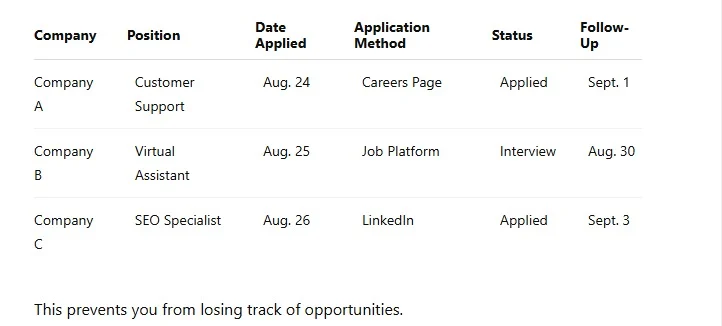
- Start tracking vacancies.
Week 3 — Applications
- Apply to suitable positions.
- Customize your CV.
- Write relevant cover letters.
- Network with recruiters and professionals.
Week 4 — Interviews and Improvement
- Prepare for interviews.
- Follow up appropriately.
- Review applications that received responses.
- Improve weaknesses in your CV or portfolio.
- Continue applying.
This turns remote job hunting into a structured process rather than random daily searching.
Final Checklist Before Applying for a Remote Job
Before submitting an application, ask yourself:
-
Does the company actually exist?
-
Can I find the company’s official website?
-
Can I verify the vacancy independently?
-
Does the job match my skills?
-
Have I read the entire job description?
-
Is the position genuinely open to candidates in Nigeria?
-
Do I understand the working hours?
-
Is the salary or compensation clearly explained?
-
Have I customized my CV?
-
Is my CV free of obvious errors?
-
Do I have relevant work samples?
-
Have I researched the employer?
-
Have I verified the recruiter?
-
Have I avoided sharing unnecessary sensitive information?
-
Has anyone asked me to pay money to get the job?
If the answer to the final question is yes, stop and investigate before proceeding. Legitimate employers do not require applicants to pay simply to obtain employment.
Conclusion
Remote jobs in Nigeria can provide valuable opportunities for professionals who have the right skills, strong applications and the ability to work effectively in a digital environment. Current Nigerian job listings demonstrate that remote opportunities exist across technology, marketing, customer service, administration, finance, education, sales and other fields.
However, job seekers should approach remote recruitment with both ambition and caution.
The most effective strategy is to identify a professional career direction, develop relevant skills, create a strong CV and portfolio, search through reputable channels, research employers and prepare seriously for interviews.
At the same time, never ignore warning signs. Fake remote jobs can be used to obtain money or personal information. The FTC advises job seekers to research companies and recruiters independently, avoid paying for employment, and be cautious of fake checks, unexpected messages and requests for sensitive information.
The goal should not simply be to find a remote job.
The goal should be to find a legitimate remote job that matches your skills, offers a genuine employment opportunity and provides a sustainable path for professional growth.
For Nigerian job seekers, that combination of skills + targeted applications + verification + persistence provides a much stronger foundation for succeeding in the remote employment market.