
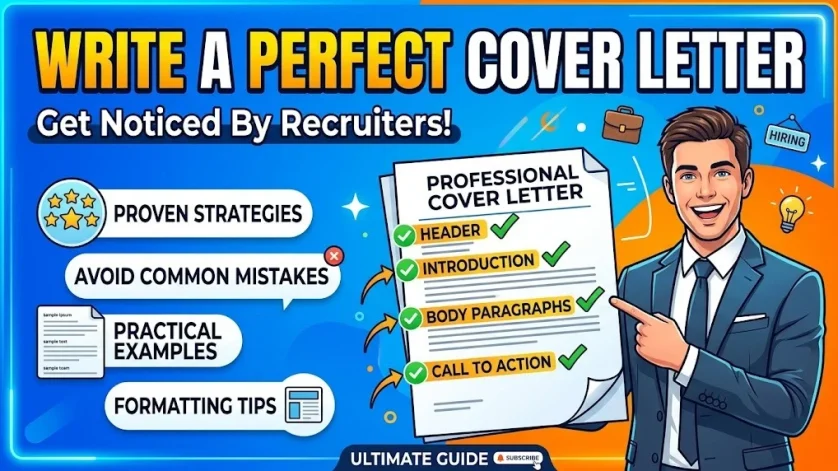
A well-written cover letter can strengthen a job application by giving an employer context that a CV alone may not provide. While your CV summarizes your qualifications, experience, skills and achievements, your cover letter gives you an opportunity to explain why you are interested in the position and why your background is relevant to the employer’s needs.
However, writing a cover letter is not simply a matter of copying your CV into paragraph form.
A professional cover letter should be targeted, concise, relevant and persuasive. It should quickly communicate what position you are applying for, what makes you suitable for the role and what value you could bring to the organization.
For job seekers competing for limited opportunities, understanding how to write a professional cover letter can make the application process more effective.
This guide explains how to create a strong cover letter from beginning to end, including practical examples, formatting guidance, common mistakes and strategies for different situations.
What Is a Cover Letter?
A cover letter is a professional document submitted alongside a CV or résumé when applying for a job.
Its primary purpose is to introduce you to the employer and provide additional context about your application.
A good cover letter can help answer three important questions:
- What position are you applying for?
- Why are you interested in the position?
- Why should the employer consider you?
Your CV provides detailed information about your professional background.
Your cover letter should provide the story and relevance behind that information.
Is a Cover Letter Still Important?
Not every employer requires a cover letter.
Some job advertisements specifically request one, while others make it optional. Some recruitment platforms may also provide a dedicated field for candidates to submit a cover letter.
When an employer requests a cover letter, failing to provide one can mean failing to follow the application instructions.
Even when optional, a well-written cover letter can be useful when you need to explain something that isn’t immediately obvious from your CV.
For example:
- Why you’re changing careers.
- Why you’re applying from another industry.
- Why you’re particularly interested in the company.
- How your transferable skills match the position.
- Why your previous experience is relevant to the new role.
The important point is that a cover letter should add value rather than repeat your CV word for word.
What Makes a Professional Cover Letter Effective?
A strong cover letter usually has several characteristics.
It is targeted
It is written specifically for the position.
It is relevant
It focuses on qualifications that matter to the employer.
It is concise
Recruiters often have many applications to review.
It is evidence-based
It supports claims with examples.
It is professional
The language is clear, respectful and appropriate.
It is error-free
Spelling and grammatical mistakes can undermine an otherwise strong application.
It has a clear structure
The reader should immediately understand why you’re writing.
The Basic Structure of a Professional Cover Letter
A professional cover letter can generally be organized into the following sections:
- Your contact information.
- Date.
- Employer’s information where appropriate.
- Professional salutation.
- Opening paragraph.
- Relevant qualifications and experience.
- Evidence of achievements or capabilities.
- Why you want to work for the organization.
- Closing paragraph.
- Professional sign-off.
Let’s examine each section.
1. Include Your Contact Information
At the top of the document, include relevant contact details.
For example:
XYZ,
Lagos, Nigeria
Phone: +234 XXX XXX XXXX
Email: example@email.com
LinkedIn: linkedin.com/in/example
You don’t need to include unnecessary personal information.
Avoid adding details such as:
- National identification numbers.
- Bank details.
- Religious affiliation.
- Marital status.
- Unrelated personal information.
The objective is to make it easy for the employer to contact you.
2. Add the Date
Include the date below your contact information.
For example:
31 August 2026
This gives the document a professional appearance and establishes when the application was made.
3. Address the Employer Professionally
If the recruiter’s or hiring manager’s name is provided, use it.
For example:
Dear Ms. Okafor,
This is generally more personalized than:
Dear Sir/Madam,
If you don’t know the individual’s name, alternatives can include:
Dear Hiring Manager,
or:
Dear Recruitment Team,
Avoid overly casual greetings such as:
Hi guys,
or:
Hello,
when submitting a formal job application.
4. Write a Strong Opening Paragraph
The opening paragraph is extremely important.
It should immediately establish:
- The position you’re applying for.
- Your professional background.
- Why you’re interested.
Weak opening
I am writing to apply for the position advertised on your website. I am hardworking, dedicated and passionate about working.
This is generic.
Better opening
I am writing to apply for the Administrative Assistant position at ABC Limited. With a background in Business Administration and practical experience supporting office operations, maintaining records and preparing reports, I am interested in contributing my organizational and administrative skills to your team.
The second version tells the employer immediately what you’re applying for and why your background is relevant.
5. Don’t Start With “I Need a Job”
A cover letter should focus on the professional relationship between you and the employer.
Avoid statements such as:
“I need this job because I have been unemployed for six months.”
Your personal circumstances may be important to you, but they aren’t necessarily the strongest reason for hiring you.
Instead, explain what you can contribute.
6. Demonstrate Relevant Qualifications
The second paragraph should connect your qualifications to the position.
Don’t list everything you’ve ever done.
Choose the most relevant information.
For example:
During my internship, I supported daily administrative activities, maintained electronic and physical records, prepared correspondence and assisted with scheduling meetings. I also used Microsoft Word and Excel to organize information and prepare reports. These experiences strengthened my attention to detail, organization and ability to manage multiple tasks within deadlines.
Notice the structure:
Experience → Tasks → Skills → Relevance.
7. Use Evidence Instead of Empty Claims
One of the biggest mistakes candidates make is filling their cover letter with adjectives.
Examples include:
I am hardworking.
I am highly motivated.
I am dedicated.
I am a team player.
I am passionate.
These statements aren’t necessarily bad, but they are weak without evidence.
Instead of saying:
“I have excellent organizational skills.”
Show it:
“During my internship, I maintained and updated administrative records while coordinating documentation for multiple ongoing activities.”
Evidence is more persuasive than unsupported claims.
8. Quantify Achievements Where Possible
Numbers can make your achievements more concrete.
Compare:
Managed customer enquiries.
with:
Responded to an average of 40 customer enquiries per day while maintaining accurate records and escalating complex issues to the appropriate team.
The second statement gives the employer a better sense of scale.
You can quantify:
- Customers served.
- Projects completed.
- Revenue generated.
- Time saved.
- Records managed.
- Team size.
- Tasks completed.
- Response time.
- Productivity improvements.
Don’t invent numbers.
Only use figures you can genuinely support.
9. Explain Why You Want to Work for the Company
A strong cover letter shouldn’t only explain why you need the job.
It should also demonstrate why you want to work for that organization.
For example:
I am particularly interested in ABC Limited because of its focus on providing technology-driven solutions to small and medium-sized businesses. The opportunity to contribute to an organization operating in this area aligns with my interest in business operations and digital solutions.
This is more convincing than:
“I want to work for your company because it is a reputable organization.”
Research the organization before writing this section.
10. Show How You Can Add Value
This is where you connect your skills to the employer’s needs.
Suppose the vacancy emphasizes:
- Customer service.
- Data entry.
- Communication.
- Microsoft Excel.
Your letter could say:
My experience handling enquiries, maintaining records and working with Microsoft Excel would allow me to support the organization’s customer service and administrative processes effectively.
This answers the employer’s underlying question:
“What can this person contribute?”
Practical Example: Cover Letter for an Administrative Assistant
Here is an example of how the principles can come together.
Dear Hiring Manager,
I am writing to apply for the Administrative Assistant position at ABC Limited. With a background in Business Administration and practical experience supporting administrative activities, maintaining records and preparing reports, I am interested in bringing my organizational and communication skills to your team.
During my previous internship, I supported daily office operations by maintaining administrative records, preparing documents, responding to routine enquiries and assisting with meeting coordination. I also used Microsoft Word and Excel to organize information and prepare reports. These responsibilities strengthened my attention to detail, time-management abilities and capacity to manage multiple tasks effectively.
I am particularly interested in joining ABC Limited because of its reputation for delivering professional services and its focus on operational efficiency. I believe my administrative experience, willingness to learn and ability to work collaboratively would enable me to contribute positively to your organization.
I would welcome the opportunity to discuss how my skills and experience align with the requirements of the position. Thank you for considering my application. I look forward to hearing from you.
Yours sincerely,
Mr. X
This example works because it doesn’t simply say:
“I’m hardworking.”
Instead, it demonstrates relevant experience and connects that experience to the employer’s needs.
How to Write a Cover Letter With No Experience
Fresh graduates often assume that they cannot write a strong cover letter because they haven’t worked professionally.
That’s not true.
You can draw evidence from:
- Internships.
- NYSC.
- Industrial training.
- Academic projects.
- Volunteer work.
- Freelance work.
- Student leadership.
- Personal projects.
Example
Suppose you’re applying for a graduate marketing position.
You could write:
Although I am at the beginning of my professional career, my academic projects and volunteer activities have provided opportunities to develop practical marketing and communication skills. I have created promotional content, conducted basic audience research and collaborated with team members to support outreach activities.
This is more effective than simply saying:
“I don’t have experience, but I’m willing to learn.”
Willingness to learn is valuable, but evidence of initiative is stronger.
Example for a Fresh Graduate
Dear Hiring Manager,
I am writing to express my interest in the Graduate Trainee position at ABC Limited. As a recent graduate of Business Administration, I have developed a strong foundation in business operations, communication and analytical thinking, complemented by practical experience gained through academic projects and internship activities.
During my internship, I assisted with administrative processes, maintained records and supported team members with routine operational tasks. My academic projects also required research, data analysis, presentations and collaboration with other students. These experiences helped me develop the ability to learn quickly, manage responsibilities and work effectively within a team.
I am particularly attracted to ABC Limited because of the opportunity to develop professionally within a structured environment while contributing to the organization’s objectives. I am eager to apply my existing skills, learn from experienced professionals and take on increasing responsibilities as I develop.
Thank you for considering my application. I would appreciate the opportunity to discuss how my background, enthusiasm and willingness to learn could contribute to your graduate programme.
Yours sincerely,
Gideon Iching
How to Write a Cover Letter for a Career Change
Career changers face a different challenge.
The employer may wonder:
“Why is someone from this background applying for this position?”
Your cover letter provides an opportunity to explain the transition.
For example, someone moving from teaching into customer success could write:
My experience in education has developed strong communication, relationship management and problem-solving abilities that are directly relevant to customer success. In my previous role, I regularly explained complex information, responded to individual needs and managed multiple responsibilities simultaneously. I am now seeking to apply these transferable skills in a customer-focused business environment.
This explains the transition rather than leaving the recruiter to guess.
Don’t Rewrite Your CV
Your cover letter and CV should complement each other.
CV
The CV answers:
What have you done?
Cover letter
The cover letter answers:
Why is that experience relevant to this position?
For example, your CV might say:
Managed customer enquiries and maintained customer records.
Your cover letter can explain:
My experience handling customer enquiries strengthened my ability to listen carefully, identify customer needs and resolve routine issues professionally.
That adds context rather than duplication.
Research Before Writing
Before you write your cover letter, study the vacancy carefully.
Identify:
Job title
What position are they recruiting for?
Core responsibilities
What will the successful candidate actually do?
Required skills
What capabilities does the employer emphasize?
Qualifications
What education or professional credentials are required?
Company information
What does the organization do?
Culture and values
What does the employer emphasize about its workplace?
Then select the strongest parts of your background that match these requirements.
Use Keywords Naturally
Many employers use applicant tracking systems to manage applications.
Relevant keywords can help make your application easier to identify, particularly when they accurately reflect the job description.
Suppose the vacancy repeatedly mentions:
- Project management.
- Microsoft Excel.
- Data analysis.
- Reporting.
If you genuinely possess those skills, use the same terminology naturally.
For example:
“My experience using Microsoft Excel for data analysis and reporting has strengthened my ability to organize information and support operational decision-making.”
Don’t stuff keywords into your letter unnaturally.
Relevance matters more than repetition.
Keep the Cover Letter Concise
A professional cover letter doesn’t need to be several pages long.
For most applications, one page is usually sufficient.
Focus on:
- Your strongest qualifications.
- Relevant experience.
- Evidence of your abilities.
- Your interest in the organization.
- A clear closing.
If a recruiter can understand your value quickly, you’ve done your job.
Choose a Professional Format
Use a clean and readable layout.
Recommended elements include:
- Professional font.
- Consistent font size.
- Clear spacing.
- Short paragraphs.
- Standard margins.
- Simple formatting.
- No excessive graphics.
- No distracting colours.
The content should be the focus.
For most professional positions, a simple, polished document is safer than an elaborate design.
Save the File Professionally
Don’t submit a document named:
CV final final new 3.docx
Use a professional filename.
For example:
Gideon_Iching_Cover_Letter_Administrative_Assistant.pdf
This makes your application easier for recruiters to identify and manage.
If the employer specifies a file naming convention, follow it exactly.
PDF or Word Document?
Follow the employer’s instructions.
If no format is specified, PDF is often useful because it preserves formatting across different devices.
However, some recruitment systems may specifically request Word documents.
The rule is simple:
Follow the employer’s instructions first.
Should You Address the Hiring Manager by Name?
Yes, when you can reliably identify the correct person.
For example:
Dear Mr. Okoro,
can be more personal than:
Dear Hiring Manager,
However, don’t use a name simply because you found someone with a similar title on LinkedIn.
Make sure you’re addressing the appropriate person.
If you’re uncertain, Dear Hiring Manager is perfectly professional.
Should You Include Salary Expectations?
Generally, don’t include salary expectations in a cover letter unless the employer specifically requests them.
If the vacancy says:
“Please state your expected salary.”
then follow the instruction.
Otherwise, the cover letter should focus on:
- Qualifications.
- Experience.
- Skills.
- Interest.
- Value.
Should You Explain Why You Left Your Previous Job?
Usually, no.
A cover letter isn’t normally the place to provide a detailed explanation of your resignation or termination.
If there’s a significant career gap or career transition that needs context, a brief explanation may be appropriate.
Keep it professional.
Avoid criticizing former employers.
Common Cover Letter Mistakes
1. Using the Same Letter for Every Job
A generic cover letter signals limited effort.
Customize it.
2. Spelling the Company’s Name Incorrectly
This can immediately undermine your application.
Double-check:
- Company name.
- Job title.
- Hiring manager’s name.
3. Writing Too Much
Recruiters don’t need your entire life story.
Focus on relevance.
4. Repeating the CV
The cover letter should provide context, not duplicate every bullet point.
5. Using Excessive Flattery
Avoid statements like:
“Your company is the greatest company in the entire industry and it would be my biggest dream to work there.”
Professional interest is better than exaggerated praise.
6. Making Unsupported Claims
Avoid:
“I am the best candidate for this position.”
You don’t know who else applied.
Instead:
“My experience in administrative support and data management aligns well with the requirements of the position.”
7. Using Informal Language
Avoid:
“Hey, I saw your job and I really want it.”
Use:
“I am writing to apply for…”
8. Focusing Only on What You Want
Don’t make the entire letter about:
“I need experience.”
“I need money.”
“I need a job.”
Explain what you can contribute.
How to Make Your Opening More Powerful
Instead of beginning with a generic statement, identify your strongest relevant qualification.
Example 1 — Experienced Candidate
With five years of experience managing customer relationships and supporting business development activities, I am excited to apply for the Business Development Executive position at ABC Limited.
Example 2 — Fresh Graduate
As a recent Accounting graduate with internship experience in bookkeeping, financial documentation and Excel-based reporting, I am excited to apply for the Junior Accountant position at ABC Limited.
Example 3 — Career Changer
After developing extensive experience in client communication and project coordination, I am now seeking to transition into a customer success role where I can apply these transferable skills to building long-term client relationships.
These openings immediately establish relevance.
Focus on Results
Where possible, explain the outcome of your work.
Weak:
Responsible for social media.
Better:
Managed the organization’s social media content calendar and increased average monthly engagement by 25% over six months.
Weak:
Assisted with administrative work.
Better:
Supported daily administrative operations by organizing records, preparing reports and coordinating documentation for multiple departments.
Results make your experience more meaningful.
Use the Employer’s Language
If the job description says:
“Coordinate recruitment activities.”
and your experience includes this responsibility, use similar terminology:
“I have experience coordinating recruitment activities, maintaining candidate records and supporting interview scheduling.”
This makes the connection between your experience and the vacancy obvious.
But Don’t Copy the Job Description
Using relevant terminology is helpful.
Copying entire sentences from the vacancy is not.
Your cover letter should sound like you, not like the employer’s advertisement.
Cover Letter Checklist
Before submitting your application, ask yourself:
- Did I mention the exact job title?
- Did I address the employer appropriately?
- Is my opening paragraph specific?
- Did I explain why I am interested?
- Did I highlight relevant experience?
- Did I provide evidence of my skills?
- Did I focus on the employer’s needs?
- Did I avoid unnecessary information?
- Did I avoid repeating my entire CV?
- Did I check spelling and grammar?
- Did I use the correct company name?
- Did I follow the application instructions?
- Is the document professionally formatted?
- Is the filename professional?
- Did I include appropriate contact details?
A Simple Formula for Writing a Strong Cover Letter
If you’re unsure where to start, use this formula:
Paragraph 1: Position + Introduction
What are you applying for?
“I am applying for the [Job Title] position at [Company].”
Paragraph 2: Relevant Experience
What have you done that is relevant?
“In my previous role/internship/project, I…”
Paragraph 3: Evidence
What did you accomplish or learn?
“This experience enabled me to…”
Paragraph 4: Company + Value
Why this organization and what can you contribute?
“I am particularly interested in [Company] because… My experience in X would allow me to…”
Final Paragraph: Call to Action
What do you want next?
“I would welcome the opportunity to discuss…”
This structure makes the writing process much easier.
Final Thoughts
A professional cover letter is not simply a formal introduction attached to your CV.
When written correctly, it can help a recruiter understand the connection between your experience, the position and the organization’s needs.
The most effective cover letters are not necessarily the ones containing the biggest words or the most impressive-sounding claims.
They are the ones that are:
Specific. Relevant. Evidence-based. Professional. Concise.
Before submitting your next application, study the job description carefully. Identify the employer’s most important requirements and select two or three experiences that demonstrate your ability to meet them.
Then explain why those experiences matter to the employer.
Most importantly, don’t use your cover letter to simply tell the recruiter that you’re hardworking, passionate or motivated.
Show them.
Give them evidence.
That’s what transforms a cover letter from a generic application document into a persuasive professional introduction.